8618715108506
 manager@greensunpv.com
 solar Greensun




Homeowners and installers often ask which battery format suits a solar power system. Neither format wins outright today. Rack-mount vs wall-mount lithium batteries each fit different sites. Wall units free up floor area. They suit compact residential spaces. Rack units live in a cabinet. They serve larger or expandable banks. Four factors decide the match: footprint, expandability, installation effort, and code requirements. Cost acts as the final tiebreaker. Greensun builds both formats among its reliable LFP solar batteries. This discussion stays neutral and highly practical. Site conditions, scale, and budget usually steer most solar system owners toward one clear answer.
Key Takeaways
-
Wall-mount batteries save floor space and suit small homes with limited room.
-
Rack-mount batteries grow in small steps and fit larger or expanding systems.
-
Wall-mount batteries often cost less to install because one person can hang them.
-
Rack-mount batteries need a cabinet and a qualified crew for installation.
-
Both formats must meet applicable safety requirements and can offer similar efficiency when properly designed.
Rack-Mount vs Wall-Mount Lithium Batteries: An Overview
What Rack-Mount Means
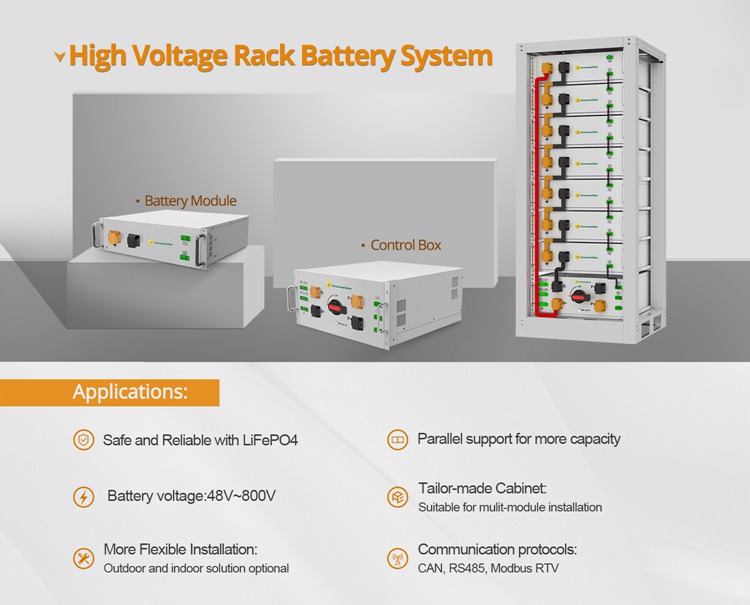
A rack-mount battery ships as a rectangular module sized to slide into a standard equipment rack or cabinet. Installers bolt the unit into rails, connect the terminals, and stack additional modules above or below as the bank grows. Server rack batteries typically run at 48 volts and come in common capacities such as a rack mount 48v 100ah battery or a rack mount 48v 200ah battery. The format suits a garage corner, a utility closet, or a dedicated power room.
These units power a home or a light commercial site just as well as any other lithium format. They are not the same product as a wall unit, though. A server rack battery carries its own enclosure, its own mounting hardware, and its own ventilation path. Greensun offers 48V rack lithium batteries in this style for buyers who want a tidy, expandable bank.
What Wall-Mount Means
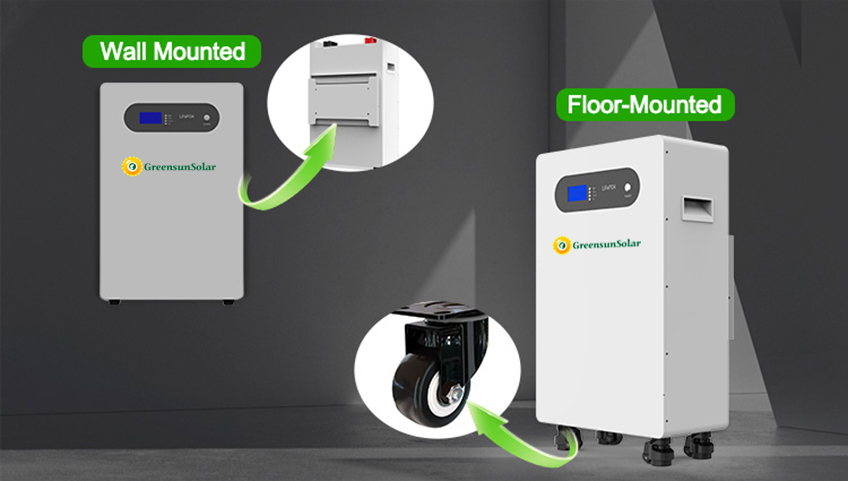
A wall-mount battery hangs on a wall bracket and holds its cells in a slim, flat case. The design frees floor area, which matters in a small garage or a finished utility space. A wall-mounted solar battery often looks like a sleek appliance, and many homeowners treat it as part of the room rather than a piece of equipment.
Wall mount batteries usually arrive as one or two large units rather than a stack of small modules. A residential wall-mounted lithium battery is a familiar example of this approach. Buyers who compare wall-mounted and rack-mounted batteries soon notice the trade: wall units save space, while rack-mounted batteries offer modular growth. Both formats can run a household load or a small commercial circuit. Neither one is inherently stronger. Greensun provides 48V wall-mount lithium batteries for residential energy storage applications.
Server Rack vs. Wall-Mount Batteries: Performance
Energy Density and Footprint
The two formats pack energy in very different shapes. Rack modules commonly provide around 5 kWh per unit and can be stacked in a cabinet or on a shelf. A wall cabinet may hold roughly 14 to 16 kWh in one enclosure fixed to a wall, with no floor footprint. Actual capacity varies by battery model and manufacturer. Wall units may carry 5 to 15 kWh per box, while rack modules often carry 2.5 to 5 kWh each and a complete rack can reach 10 to 60 kWh or more.
|
Factor |
Rack-Mount |
Wall-Mount |
|---|---|---|
|
Typical capacity per unit |
About 5 kWh per module |
14–16 kWh per cabinet |
|
Weight per unit |
Around 100 lb |
Around 300 lb |
|
Floor use |
Cabinet footprint, roughly 600 × 600 mm plus service clearance |
Frees the floor entirely |
|
Expansion step |
Add a module to an empty slot |
Add a whole unit and new wall space |
The table shows the core trade. A rack-mounted lithium battery wins on serviceability and small growth steps. A wall-mount battery wins on floor savings and capacity per box. Neither format holds an efficiency advantage by design. Both can use lithium iron phosphate cells, and both experience energy losses from conversion and standby loads. Actual system efficiency depends on the battery, inverter, operating conditions, and system configuration.
Efficiency and Scalability
Scalability separates the formats most clearly. Server rack batteries start small and grow in modest increments. A 48v server rack battery such as a rack mount 48v 100ah battery adds about 5 kWh per module, and a rack mount 48v 200ah battery doubles that step. Some 5.12 kWh modules can be connected in parallel to build a larger bank, subject to the battery manufacturer's specifications and the inverter's compatibility limits. That modular expansion lets an owner begin with two modules and add capacity as loads or budgets grow.
Wall mount batteries scale in larger jumps. Each new unit means new wall space and a new conduit run. The practical ceiling depends on the battery's parallel connection limit, inverter capacity, wiring design, and local installation requirements. Some residential systems support several units in parallel, while others have lower limits. Individual residential units may also have capacity limits unless the complete system is listed and tested for a larger configuration.
A stackable solar battery sits between the two. It offers a modular design with fewer cables and a tidy footprint. Most stacks limit the module count per tower, so very large banks may need multiple towers. Homeowners who want large capacity in fewer boxes often prefer wall-mount batteries. Installers building banks that will grow steadily tend to favor server rack batteries. The 48V rack format can also support high parallel counts when the battery and inverter are designed for that configuration. Buyers weighing server rack vs. wall-mount batteries should match the growth plan to the format, not the other way around.
Wall Mount vs Rack Mount Battery: Application Fit
Residential and Space Constraints
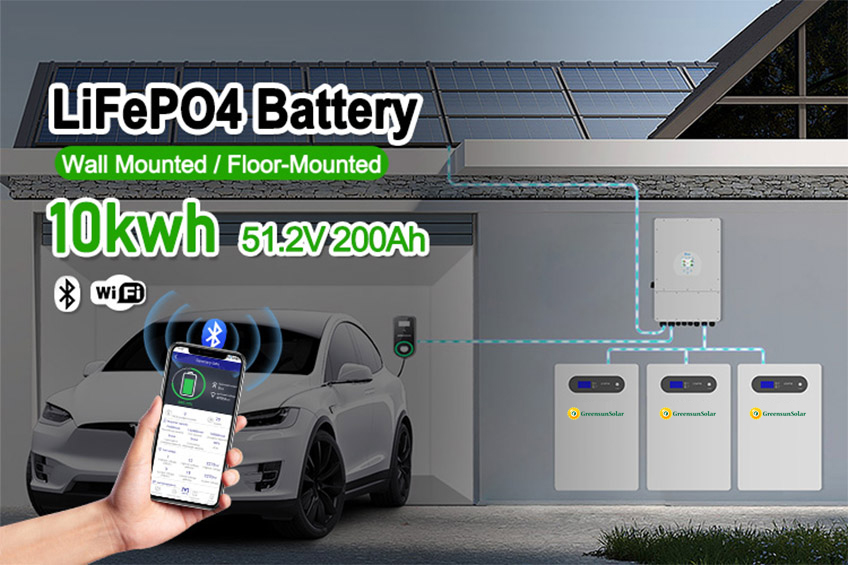
A wall-mounted solar battery suits a home with a tight garage, a finished utility corner, or no free floor area. The unit hangs above the slab, so the homeowner keeps the space underneath. A wall-mounted home battery follows this pattern, and many buyers treat the slim case as part of the room. Weight sets the hard limit, though. A 10 kWh lithium wall battery may weigh between 90 and 130 kg depending on its cell format and enclosure. That load is far too heavy for most residential drywall. A unit near 300 lb is impractical to lift and fix high on a wall without suitable equipment and structural support. Installers should confirm the wall's load-bearing capacity and keep heavy models low or move them to a floor stand when required.
The mounting surface decides whether the plan works. Installers should check the following points by wall type.
|
Wall type |
Key installation check |
|---|---|
|
Wood studs |
Confirm stud position and load capacity. Use suitable mounting plates or brackets. |
|
Concrete or brick |
Select anchors designed for the actual wall material and battery load. |
|
Steel framing |
Verify the frame can support the battery and use approved load-distribution hardware. |
|
Reinforced structure |
Confirm the structure and fixing method with a qualified installer. |
Concrete and solid masonry generally provide better support than hollow brick, plasterboard, or thin partitions. These weaker structures may need a support frame or a floor-standing installation. Aesthetics often break the tie when floor space is not an issue. A wall-mount battery hides cables behind a clean panel, and a rack cabinet looks industrial by comparison. Neither look affects performance.
Commercial and Expandable Systems
Commercial sites usually plan for growth, and server rack batteries fit that habit. A 48v server rack battery can start as a single 5 kWh module in a server room or as a larger bank for a small commercial solar project. The owner adds modules in parallel as loads rise, whether from new equipment, a larger array, or EV chargers. Depending on the product design, some systems support dozens of parallel modules and can scale from a few kilowatt-hours to hundreds of kilowatt-hours. The exact range depends on the battery model, inverter, and system design.
The physical format helps. Many server rack battery units use a 3U to 5U case and stack vertically in a standard 19-inch rack. A technician slides a new module into an empty slot and connects it, so downtime can stay short when the system is designed for expansion. This modular design supports capacity planning because the bank can grow alongside demand. A stackable solar battery offers a middle path with fewer cables per tower. Wall mount batteries scale in larger jumps, and each new box needs fresh wall space and conduit. Buyers weighing wall mount vs rack mount battery options for a commercial room should favor the rack when the bank will grow in steps. A stackable solar battery still works well for a mid-size home solar setup that needs one tidy tower. For any solar system that may expand, choose a rack and battery pair that supports parallel growth from day one. That choice can help avoid a costly redesign later.
Server Rack Battery vs Wall Mount Battery: Safety and Compliance
UL Listings and NEC Requirements
Permits hinge on listings and installation conditions, not simply on battery format. NFPA 855 provides requirements for stationary energy storage systems, while UL standards address different aspects of battery and system safety. Depending on the project, the authority having jurisdiction may require specific product listings, test reports, and installation documentation. Requirements can vary by system size, location, and local code adoption.
The standards divide the work. UL 1973 addresses stationary batteries and battery systems. UL 9540A is a test method used to evaluate thermal runaway fire propagation characteristics. UL 9540 covers energy storage systems and equipment, including the evaluated system configuration. UL 1741 applies to inverters, converters, controllers, and interconnection equipment. Battery and inverter compatibility is model-specific: a battery listed with one inverter is not automatically listed with another. Buyers should check the certificate and compatibility documentation for their exact pair. Greensun provides lithium battery products with certification documentation for buyers to review according to their project and destination-market requirements.
The NEC adds wiring rules for both formats. Installers follow applicable NEC guidelines for wiring and connections, and they add circuit breakers and fuses for over-current protection. Requirements for ventilation, guarded live parts, working space, and equipment clearances depend on the applicable code edition, battery type, and installation location. Installers should check the relevant NEC provisions and local amendments rather than applying one clearance value to every battery installation.
Fire Codes and Clearances
Fire officials may use UL 9540A test information to evaluate spacing and location requirements. Test results can influence the permitted installation arrangement, but they do not automatically remove all clearance or location requirements. Indoor server rack batteries and wall-mount batteries both fall under applicable residential and commercial energy storage rules, so format alone does not decide approval. Installers should confirm local amendments, product listings, and fire-code requirements before mounting either type.
Wall Mount vs Rack Mount Batteries: Cost Comparison
Initial Cost and Installation Labor
Labor shapes the upfront bill as much as the hardware does. The two formats typically differ in the following ways:
|
Aspect |
Wall-Mount |
Rack-Mount |
|---|---|---|
|
Labor complexity |
May be simpler when the unit is light enough and the wall is suitable for mounting |
May require cabinet assembly, module handling, and qualified installers |
|
Components |
Anchor brackets and mounting hardware, with cabling based on the system design |
Specialized cabinets or server enclosures |
|
Time |
A smaller unit may take only a few hours to install under suitable conditions |
Setup can take longer when multiple modules and a cabinet are involved |
|
DIY suitability |
May be simpler in some residential settings, but electrical work should follow local requirements |
Generally less suitable for DIY work |
A wall-mount battery may require less installation labor when the unit is manageable in weight and the wall is suitable for mounting. Server rack batteries can demand more preparation, especially when a cabinet, multiple modules, and additional wiring are involved. A homeowner planning a simple solar battery installation should weigh that gap. The wall mount vs rack mount battery decision often turns on who performs the work and what the site requires.
Maintenance and Long-Term Value
Long-term value depends on how each bank grows. Server rack batteries accept new modules in small steps, so an owner buys capacity only when needed. Wall-mount batteries scale in larger jumps, and each new box adds wall space and conduit. Rack systems may need specialized cabinets, which raises material cost. Wall mount batteries need suitable anchor brackets and structural support.
Service access also matters. A technician may be able to reach one module in a rack without touching the rest, depending on the system layout. A wall-mount battery may need to be disconnected and removed as a whole unit for certain repairs. Neither path is cheaper by default. Greensun provides lithium battery products with technical and certification documentation for buyers to review during project planning. Buyers comparing wall mount vs rack mount batteries should price the full lifecycle, not just the first invoice. The wall-mounted solar battery suits a tight budget and a small load. A server rack battery suits a bank that will expand. Match the format to the growth plan, and the cost picture stays honest.
The comparison of rack-mount vs wall-mount lithium batteries comes down to footprint, growth plan, installation labor, and code compliance. Neither format automatically outperforms the other on efficiency or safety. Actual performance depends on battery specifications, system design, installation quality, and compliance with applicable standards.
A simple decision guide helps. Homeowners with limited floor space and smaller residential loads should consider wall-mount batteries. Buyers who need larger capacity, future expansion, or a dedicated equipment room should consider server rack batteries. Installers can match either format to the site, the scale, and the budget. Greensun supplies both options with product documentation to support project evaluation. Rack-mount vs wall-mount lithium batteries remain equally valid choices, and server rack batteries simply fit different projects than wall mount batteries do.
FAQ
Which format suits a home with a small garage?
A wall-mount battery frees the floor and fits a tight garage or utility corner. Homeowners should confirm the wall can carry the load. A unit near 300 lb needs solid masonry, suitable structural reinforcement, or a floor stand. Greensun supplies both formats, so buyers can match the site.
Can a homeowner expand a bank later?
Yes. Server rack batteries can grow in small steps. A rack mount 48v 100ah battery may add roughly 5 kWh per module, and a rack mount 48v 200ah battery may provide a larger capacity step. Owners can add modules as loads rise, provided the battery and inverter support the planned configuration. Wall-mount batteries often scale in larger jumps and need new wall space.
Do the two formats differ in efficiency or safety?
Not inherently. Both formats can use lithium iron phosphate cells and can achieve comparable efficiency when properly designed. Both must meet the applicable safety and installation requirements. A server rack battery and a wall-mount battery need suitable product listings and system compatibility documentation. Format alone does not decide approval.
Which format costs less to install?
A wall-mount battery may cost less to install when the unit is relatively light and the mounting surface is suitable. Server rack batteries may need a cabinet and more installation labor. Long-term value depends on the growth plan, system size, and maintenance requirements, not the format alone.
What should a commercial site choose?
Commercial rooms that plan for growth often favor server rack batteries. Technicians can add compatible modules to an expandable system, helping the bank grow with demand. A wall-mounted home battery may suit a smaller residential installation better. Buyers should confirm the inverter listing and compatibility documentation for their exact battery and inverter combination before ordering.