8618715108506
 manager@greensunpv.com
 solar Greensun




The best high-wattage solar panels for a project depend on the project type, not on wattage alone. A homeowner needs a different panel than a factory owner or a utility developer.
Residential roofs work best with 400–450W monocrystalline modules. Commercial rooftops fit 500–550W panels. Utility-scale farms run on 600W and above.
Typical panels span 300–460W. Residential panels usually sit at 290–400W. So "high-wattage" means something different for each project.
This comparison weighs performance, application fit, compliance, and cost side by side. GREENSUN supplies modules across all three classes, which keeps the comparison practical.
Key Takeaways
-
Match solar panel wattage to your project: homes use 400–450W, commercial roofs use 500–550W, and utility farms use 600W or more.
-
Check panel efficiency, temperature coefficient, and degradation rate to compare performance, not just wattage.
-
Confirm certifications like IEC 61215, IEC 61730, and UL 61730 for safety and reliability.
-
Compare installed cost per watt, not just panel price, because fewer high-wattage panels can cut labor and wiring costs.
-
Plan for weight, mounting, and code requirements before buying, especially for larger panels.
Criteria for Comparing High-Wattage Solar Panels
Performance Metrics That Matter
Solar panel efficiency measures the share of sunlight a module converts into power. Wattage measures total output per panel. The two numbers answer different questions, and buyers need both.
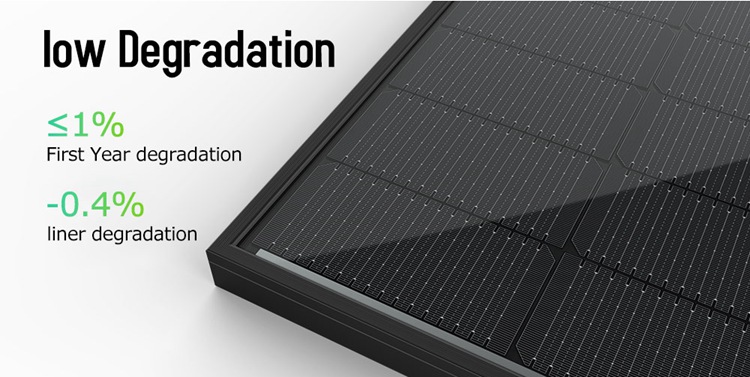
The temperature coefficient shows how much power output drops for each degree Celsius above the 25°C test condition. A coefficient of -0.4%/°C means output falls 0.4% per degree; a value closer to zero suits warm climates. The degradation rate is the percentage of output lost each year. The industry median sits near 0.5% annually, while premium modules reach roughly 0.3%. Most manufacturers back 25-year performance warranties guaranteeing at least 80% to 84% of original output.
Fit, Compliance, and Cost
Application fit covers three physical checks. Roof area decides how many modules a site holds. Panel weight and mounting compatibility decide whether the structure and racking accept the module. Larger formats demand a structural review before purchase.
Compliance rests on recognized certifications. IEC 61215 covers design qualification and long-term reliability, and IEC 61730 covers safety. U.S. projects also require UL 61730 listing, and mounting systems need UL 2703 compliance. Local fire and electrical codes add their own rules.
Cost combines the module price per watt with installation and balance-of-system (BOS) savings. Rooftop work typically costs far more per watt than ground-mounted farms. NREL benchmarks put U.S. residential systems at $2.68/W in Q1 2023 against $1.16/W for utility-scale, and EIA reports 2024 utility plants at about $1,865 per kW to build. Fewer high-wattage panels cut wiring and labor, so the installed price per watt often matters more than the sticker price. GREENSUN supplies modules across every class, which lets buyers compare on equal terms.
Solar Panel Wattage and Efficiency/Wattage Comparison
Why Wattage and Efficiency Differ
Higher wattage means more power per panel. Efficiency determines how much sunlight a panel converts into electricity. Both numbers matter, and each answers a different question. A module can post a strong watt rating and still rank mid-pack on conversion, because a larger physical size can lift total output without lifting efficiency.
Two panels of the same wattage show this clearly. One may use a smaller area of highly efficient solar cells; the other spreads less efficient cells across a bigger frame. The first fits tighter roof space, and the second may cost less per watt. This efficiency/wattage comparison matters more than either figure alone.
Monocrystalline solar cells are the common choice for high-wattage home installations. They typically deliver strong efficiency ratings in a compact footprint. Polycrystalline modules still serve many projects well, and no panel type is "bad." Each one fits a different site, budget, and mounting plan.
Finding the Most Efficient Solar Panels
Buyers hunting the most efficient solar panels should read the datasheet, not the marketing badge. Check the module efficiency percentage, the temperature coefficient, and the degradation rate together. A high-efficiency panel with a poor temperature coefficient can lose its edge on a hot roof. The highest-efficiency solar panel on a lab list may also be the hardest to source locally.
A practical efficiency/wattage comparison starts with the roof. Measure usable area, then divide by module dimensions. A 450W or 460W panel often lands in the same footprint as a lower-rated model, so the higher wattage rating delivers more output per square meter. That gain feeds directly into annual electricity production.
GREENSUN builds monocrystalline and polycrystalline modules across these classes, so buyers can weigh solar panel wattage against solar panel efficiency on equal terms. Compare efficient solar panels by installed cost per watt, and let solar production data from a shortlist decide the final pick.
400W Panels for Space-Limited Roofs
Where 400W Panels Excel
The 400–450W monocrystalline module is the residential sweet spot. These panels sit at the top of the typical 290–400W residential range, so they deliver strong output without oversizing the array. A 400 w panel also fits the footprint most homes can actually offer.
A typical 400W monocrystalline module measures about 67.8 x 44.7 x 1.2 in and weighs 45.2 lbs. That size suits a single installer and standard residential racking.
|
Specification |
Value |
|---|---|
|
Dimensions |
67.8 x 44.7 x 1.2 in |
|
Weight |
45.2 lbs |
Homeowners with limited roof space gain the most here. Fewer modules cover the same area, and the watt rating stays high per square foot. The solar cells in a monocrystalline module also convert sunlight at a solid rate, which supports solar panel efficiency on a compact roof.
Trade-Offs to Know
Layout flexibility is the main trade-off. A 400W module is smaller and lighter than a solar panel 450w or solar panel 460w unit, so it fits around vents, chimneys, skylights, and walkways more easily. A 465-watt panel or a solar panel 460watt model may cut the panel count on paper, yet a real roof rarely offers a clean rectangle.
"A smaller 400W panel may fit around roof obstacles more effectively or be easier to transport and install. The better wattage is the one that works with the real site—not simply the larger number."
Replacement availability generally favors this class. Local suppliers stock 400W modules, so a swap stays practical years later. Buyers who want the most efficient solar panels should still compare efficiency and high-efficiency options, because higher wattage does not always mean better output per square meter. Weigh wattage against fit, and pick efficient solar panels that match the actual roof.
500W Panels for Commercial Rooftops
Where 500W Panels Excel
The 500–550W class is the commercial workhorse. A 500W module delivers more output per panel than a 450W or 460W residential unit, so a warehouse or retail roof needs fewer modules to hit the same array size. Fewer panels mean less wiring, fewer racking clamps, and fewer labor hours. Balance-of-system cost per watt falls as a result, and the installed price per watt improves even when the module itself costs more.
Commercial buyers also gain from the larger format in another way. A bigger frame holds more solar cells, and that raises total power output without demanding premium cell technology. GREENSUN supplies 500W-class modules alongside its residential and utility lines, which lets a commercial buyer compare wattage classes on one quote.
Trade-Offs to Know
Weight and mounting checks matter more at this size. Each 500W solar panel weighs approximately 71.2 lbs (32.3 kg), which is notably heavier than typical panels (40–50 lbs). That heavier weight makes 500W panels more appropriate for commercial installations.
-
Commercial roofs are generally designed to bear a load of at least 20 pounds per square foot, so panels can typically be mounted without issue.
-
Additional weight from mounting hardware and equipment should be factored in (roughly 3–4 lbs per square foot for standard systems).
-
A professional structural evaluation of the rooftop is recommended before installation.
The trade-off is that larger panels can be harder to move and install. Confirm the module dimensions, racking compatibility, and roof load before choosing a higher-wattage module.
600W and Higher Panels for Utility-Scale Projects
Where Higher-Wattage Panels Excel
Utility-scale projects benefit from higher-wattage modules because each panel delivers more power. A larger frame holds more cells, so fewer modules are needed to reach the target capacity. Fewer modules can reduce racking, wiring, and labor costs across a large installation.
GREENSUN's range extends to 750W across N-type TOPCon, HJT, half-cut, and bifacial double-glass modules. Every unit carries CE, TUV, CSA, CEC, and UL certification. A higher watt rating also lifts the price per watt on the module itself, yet the installed cost per watt usually falls at this scale. Buyers who compare efficient solar panels on efficiency alone miss the bigger lever: system-level savings.
Trade-Offs to Know
Higher-wattage modules are physically larger and heavier, so transport, lifting, and mounting need more planning. Project teams should confirm tracker compatibility, structural loads, inverter input limits, and local certification requirements before ordering.
Large-format modules can also be less convenient for smaller sites. A project with limited access, irregular roof space, or a constrained mounting system may benefit more from smaller panels than from maximizing watts per module.
Comparing High-Wattage Solar Panels by Project Type
The trade-off between fewer high-wattage panels and more lower-wattage panels deserves a close look. Fewer large modules cut wiring runs and labor hours, and they simplify the string layout. More smaller modules, by contrast, fit around obstacles and keep replacement simple. A 450W unit sits near the top of the class, and a solar panel 450w model often covers the same footprint as a lower-rated one. Buyers who want the most efficient solar panels should still compare efficiency and high-efficiency options, because a strong watt rating does not always mean better output per square meter. GREENSUN builds monocrystalline modules across this class, so a homeowner can weigh solar panel efficiency against cost on one quote.
Choosing Panels for Commercial Projects
Recommended Panel and Why
The 500–550W class fits most commercial rooftops. A module in this range balances three forces at once: raw output, rooftop logistics, and balance-of-system savings. A 500W unit produces more power per panel than a solar panel 450w or solar panel 460w residential module. A warehouse or retail roof therefore needs fewer units to reach the target array size. Fewer units cut wiring runs, racking clamps, and labor hours. The installed price per watt drops even when the module itself carries a higher sticker price.
This class also rewards buyers who read beyond the wattage badge. A larger frame holds more solar cells, and that raises total power without demanding premium cell technology. Buyers who want efficient solar panels should still compare efficiency ratings across the shortlist. A strong wattage rating and a strong conversion rate answer different questions, and the commercial site needs both answers.
Mounting, Weight, and BOS Savings
Three physical checks decide whether a commercial roof accepts this class.
-
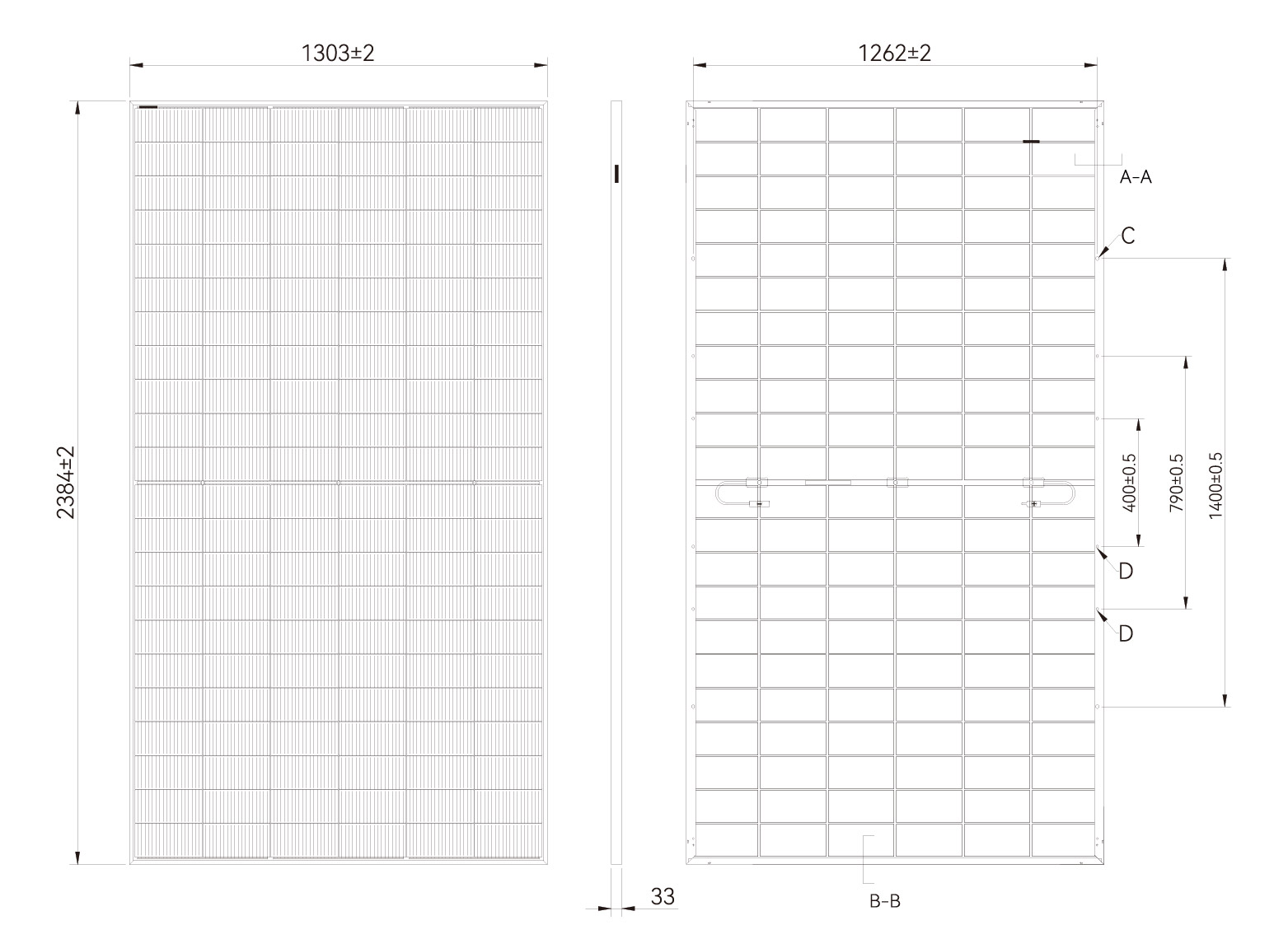
Structural weight limits: each 500W module weighs roughly 71.2 lbs (32.3 kg), well above the 40–50 lb range of residential units. Commercial roofs generally carry at least 20 pounds per square foot, so the panels themselves usually fit within the design load. Mounting hardware adds roughly 3–4 lbs per square foot, and that figure belongs in the structural review. Older or weakened roofs deserve a professional evaluation before ordering.
-
Mounting compatibility: standard residential racking may not accept the larger frame. Confirm clamp zones and rail spacing against the module datasheet.
-
Inverter pairing: a long string of high-wattage modules can push voltage past a small inverter's window. Match string size to the inverter's rated input range before finalizing the design.
Handling deserves a line of its own. Two installers may need lifting equipment for a module this heavy, and crews should plan roof access around the larger dimensions.
GREENSUN supports commercial sites beyond the module itself. The company offers one-stop on-grid, off-grid, and hybrid system options, so a commercial buyer can source panels, inverters, and storage from a single supplier. That single-source approach simplifies warranty claims and shortens the procurement cycle. Pair the 500–550W class with a full system quote, and compare the installed cost per watt rather than the module price alone.
Choosing Panels for Utility-Scale Projects
Recommended Panel and Why
The 600W+ class fits utility-scale work best. A larger frame holds more cells, so each module delivers more output and each acre of land produces more power. Fewer modules per megawatt cut racking, wiring, and labor, and that drives the lowest cost per watt at scale. The module price per watt may run higher than a smaller format, yet the installed price per watt usually falls once land, labor, and hardware enter the total.
GREENSUN brings 20+ years of experience and more than 120GW installed to this class. Its range reaches 750W across N-type TOPCon, HJT, half-cut, and bifacial double-glass modules, all certified by CE, TUV, CSA, CEC, and UL. Buyers comparing wattage classes should weigh system-level savings against a single efficiency figure.
Logistics, Tracking, and Compliance
Transport and handling need planning at this size. Crews should lift modules by the frame, never the glass, and confirm pallet configuration and container loading before dispatch. Tracker compatibility is the second check. Module size and weight affect mounting structures, so confirm the tracker's rated load before ordering.
Compliance spans product certification and local land-use rules. UL and IEC listings cover the module itself. Site rules add their own layer: fencing must follow the latest National Electrical Code, which calls for a 6-foot fence with three lines of barbed wire or a 7-foot fence without barbed wire. Many localities restrict barbed wire and require wildlife-friendly fencing instead. Setbacks, vegetated buffers, and decommissioning terms vary by community, and applicants should coordinate with local emergency services and submit stormwater and erosion control plans. Confirm every requirement before ordering panels.
Project type decides the wattage class. Homes fit 400–450W monocrystalline modules, commercial rooftops suit 500–550W units, and utility farms run on 600W and above. GREENSUN supplies all three classes, so a buyer can compare them on one quote.
High-wattage solar panels reward buyers who weigh performance, fit, compliance, and cost together. Wattage alone tells only part of the story, and efficiency answers a different question.
Three steps close the decision. Confirm local code and certification requirements, check structural load limits, and request a per-watt and balance-of-system cost comparison for every shortlisted panel.
FAQ
Does a higher wattage panel always produce more electricity?
No. Wattage sets output per panel under test conditions. Roof area, shading, orientation, and inverter pairing decide real production. A solar panel 450w unit on a shaded roof can underperform a smaller module on a clear one. Match the module to the site first.
Which wattage class suits a home with limited roof space?
The 400–450W monocrystalline class fits most homes. These modules sit at the top of the typical residential range and weigh about 45.2 lbs, which standard racking handles well. A solar panel 460w model can work on a tight roof, yet layout flexibility often matters more than the badge.
Can a commercial site use residential panels instead?
Yes, but the economics shift. A 500–550W module cuts panel count, wiring, and labor on a large roof. Residential-class units such as a solar panel 460watt model still serve small commercial jobs. GREENSUN supplies both classes, so buyers can compare installed cost per watt directly.
What certifications should buyers confirm before ordering?
Look for IEC 61215 and IEC 61730 for the module, plus UL 61730 listing for U.S. projects. GREENSUN modules carry CE, TUV, CSA, CEC, and UL certification across its range up to 750W. Local fire and electrical codes add their own requirements.
How long do high-wattage panels last?
Most manufacturers back 25-year performance warranties guaranteeing at least 80% to 84% of original output. Annual degradation typically runs near 0.3% to 0.5%. GREENSUN backs its modules with warranties and after-sales service across more than 100 export markets.