8618715108506
 manager@greensunpv.com
 solar Greensun




When comparing lithium battery systems, buyers often focus on battery capacity or rated power without fully understanding how these two specifications work together. A battery with a large energy capacity may store plenty of electricity, but it does not necessarily mean the system can deliver high power at one time. Similarly, a battery with a high power rating may support heavy electrical loads but provide only a limited operating duration if its energy capacity is small.
Understanding the difference between power and energy capacity is essential when selecting a lithium battery for residential solar storage, commercial buildings, industrial facilities, and large-scale battery energy storage systems (BESS).
In simple terms, battery power determines how much electricity a system can deliver at a given moment, while energy capacity determines how much electricity it can store and supply over time. Both specifications must be considered when designing a reliable energy storage solution.
This guide explains the relationship between kW and kWh, how to calculate battery operating time, which technical specifications matter, and how to select a suitable lithium battery system from GreenSun PV.
What Is the Difference Between Battery Power and Energy Capacity?
Battery power and energy capacity describe two different aspects of an energy storage system. Although they are closely related, they cannot be used interchangeably.
Battery power (kW) refers to the rate at which a battery can deliver or absorb electrical energy. It determines how many appliances, machines, or electrical loads the battery can support simultaneously.
Battery energy capacity (kWh) refers to the total amount of energy stored in a battery. It indicates how much electricity is available for use over a period of time.
A simple way to understand the difference is to think of a water tank. Power is similar to how quickly water flows through a pipe, while energy capacity is similar to how much water the tank can hold.
- kW (kilowatts): Measures the rate of energy delivery or consumption.
- kWh (kilowatt-hours): Measures the amount of energy stored or consumed over time.
For example, a battery system rated at 50kW with an energy capacity of 100kWh can theoretically deliver 50kW for two hours under ideal conditions. Its actual operating duration will depend on usable battery capacity, conversion losses, operating limits, and the connected load.
This distinction is especially important when comparing different lithium battery products. A larger kWh rating does not automatically mean a higher kW output, and a higher power rating does not necessarily mean longer backup time.
How Is Lithium Battery Power Measured in kW?
Battery power is generally expressed in kilowatts (kW). It describes how quickly electrical energy can move between the battery and the connected system.
For a battery energy storage system, the power rating affects how much electrical demand can be supported at the same time. For example, a factory may need to operate several motors, production machines, lighting systems, and other equipment simultaneously.
If the combined electrical demand exceeds the battery system's available output power, the battery may not be able to supply all the loads without assistance from the grid or another power source.
When evaluating battery power, buyers should distinguish between the following specifications:
- Rated power: The continuous power output the system is designed to provide under specified operating conditions.
- Peak power: A higher output that may be available for a limited period, such as during motor startup.
- Charge power: The maximum rate at which the battery can accept energy.
- Discharge power: The maximum rate at which the battery can deliver energy.
Continuous power and peak power should not be confused. A battery that supports a high short-term peak output may not be able to maintain that level throughout normal operation.
For this reason, commercial and industrial buyers should evaluate the continuous discharge rating, inverter output, battery current limits, and the startup requirements of connected equipment before selecting a system.
What Does Energy Capacity in kWh Mean?
Energy capacity measures the total amount of electrical energy a battery can store. It is usually expressed in kilowatt-hours (kWh), which is one of the most important specifications when estimating backup duration and energy availability.
For example, a 10kWh lithium battery has a nominal energy capacity of 10 kilowatt-hours. In theory, it could supply a 1kW load for 10 hours or a 2kW load for 5 hours, assuming the entire rated capacity were available and there were no energy losses.
In actual applications, however, not all nominal battery energy can necessarily be used. The available energy depends on the permitted depth of discharge (DoD), battery management settings, conversion efficiency, temperature, and operating conditions.
For solar energy storage, buyers should distinguish between:
- Nominal capacity: The total rated energy capacity of the battery.
- Usable capacity: The amount of energy available within the permitted operating range.
- Delivered energy: The electricity that reaches the connected loads after system conversion losses.
For example, a 100kWh battery operating at an 80% usable depth of discharge provides 80kWh of usable DC energy before conversion losses. The actual AC energy delivered to loads will be lower depending on inverter and system efficiency.
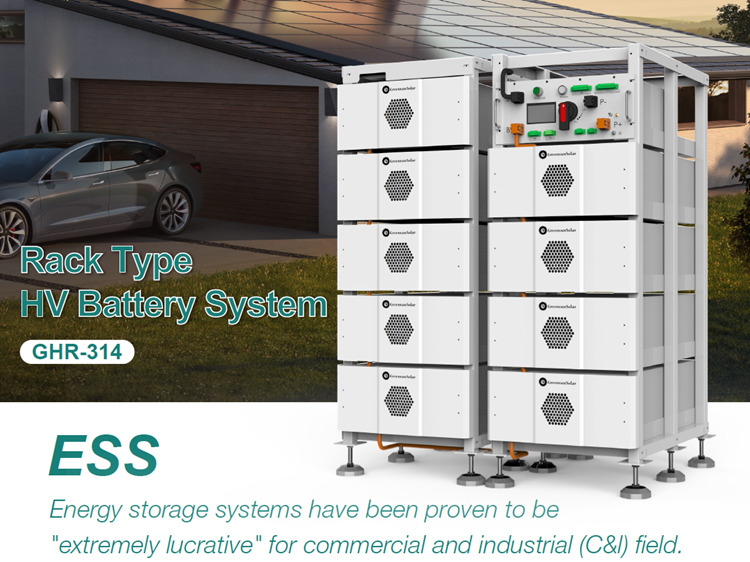
GreenSun PV provides modular lithium battery solutions with different voltage and energy configurations. Buyers can explore its high-voltage lithium battery systems for applications that require expandable storage capacity and higher-voltage configurations.
How to Calculate Battery Operating Time
One of the most practical ways to understand the relationship between battery power and energy capacity is to calculate how long a battery can supply a specific load.
The basic formula is:
Operating Time (hours) = Energy Capacity (kWh) ÷ Load Power (kW)
For example, consider a battery with 100kWh of nominal energy capacity supplying a continuous 20kW electrical load.
100kWh ÷ 20kW = 5 hours
This means the theoretical operating time is five hours if the entire nominal battery capacity is available and system losses are ignored.
For a more realistic estimate, usable capacity and system efficiency should be included:
Estimated Operating Time = Nominal Capacity × Usable DoD × Discharge Efficiency ÷ Load Power
Using an illustrative example with 100kWh nominal capacity, 90% usable DoD, 95% discharge efficiency, and a 20kW load:
100 × 90% × 95% ÷ 20 = 4.275 hours
The estimated operating time is approximately 4.3 hours under these simplified assumptions.
Actual performance may vary because of temperature, battery protection limits, inverter efficiency, load fluctuations, and other system conditions.
Understanding the Relationship Between kW, kWh, and Battery Voltage
In addition to power and energy capacity, battery voltage is another important specification. Voltage affects the electrical configuration, current requirements, and compatibility of a battery system with its inverter or power conversion system.
Battery energy capacity can be estimated using voltage and amp-hour capacity:
Energy (Wh) = Voltage (V) × Capacity (Ah)
For example, a 51.2V lithium battery rated at 314Ah has a nominal energy capacity of:
51.2V × 314Ah = 16,076.8Wh, or approximately 16.08kWh.
This calculation helps buyers understand how battery voltage and amp-hour capacity translate into nominal energy storage.
However, amp-hour capacity alone does not determine the battery's maximum power output. The permitted discharge current, cell characteristics, BMS limits, and inverter specifications must also be considered.
For example, two batteries may have similar kWh ratings but different voltage and current configurations. Their electrical performance and compatibility with a particular inverter may therefore be different.
GreenSun PV offers several lithium battery configurations, including 48V rack-mounted lithium batteries for modular energy storage applications.
How Power and Energy Capacity Work Together in Commercial Battery Systems
For commercial and industrial energy storage, selecting the right combination of power and energy capacity is essential. The system must supply enough instantaneous power to support the required electrical loads while storing enough energy to meet the expected operating duration.
Consider a commercial battery energy storage system with the following configurations:
| System Configuration | Rated Power | Energy Capacity | Ideal Full-Power Duration |
|---|---|---|---|
| ESS 51.2-30KW | 30kW | 51.2kWh | About 1.7 hours |
| ESS 100.3-50KW | 50kW | 100kWh | 2 hours |
| ESS 200.7-100KW | 100kW | 200kWh | 2 hours |
These configurations are based on GreenSun PV's published commercial energy storage product specifications. The operating durations are theoretical calculations using nominal energy capacity divided by rated power. They do not represent guaranteed usable backup times.
The comparison shows that a higher power rating does not necessarily provide longer operating time. For example, a 100kW system with 200kWh of energy capacity has the same theoretical full-power duration as a 50kW system with 100kWh.
GreenSun PV offers commercial lithium battery energy storage systems with 30kW, 50kW, and 100kW rated power configurations and corresponding energy capacities of 51.2kWh, 100kWh, and 200kWh.
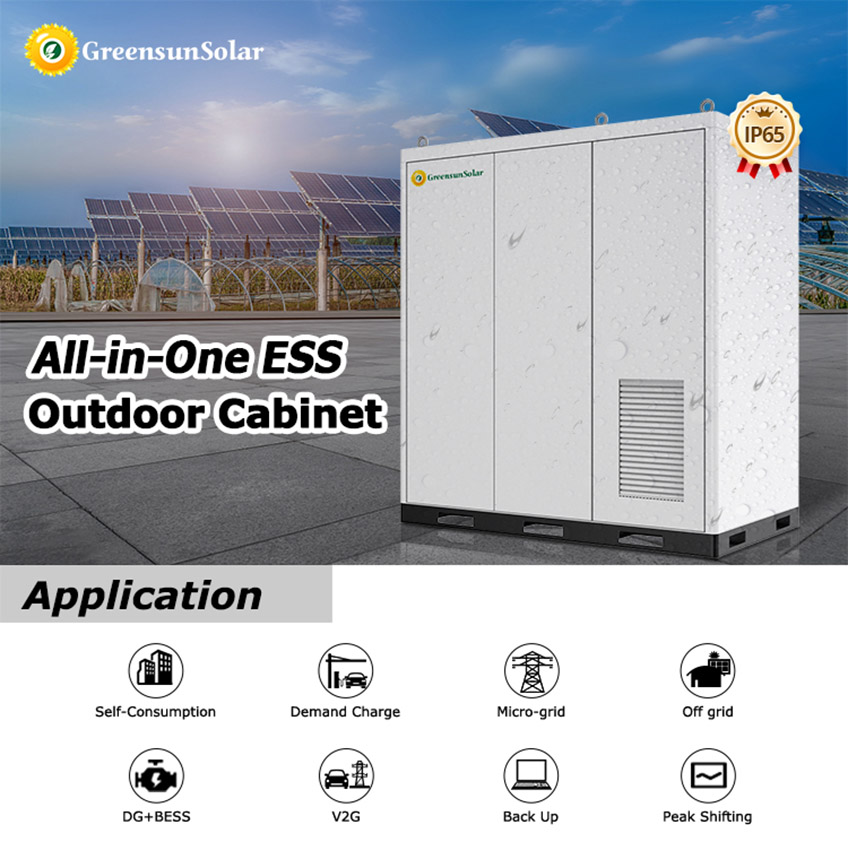
These systems are designed for applications such as factories, industrial parks, commercial buildings, charging stations, and microgrids. The appropriate configuration depends on the site's load requirements, operating schedule, and energy management strategy.
Why Battery Management Systems Affect Available Power and Capacity
A lithium battery's rated power and energy capacity are not determined by battery cells alone. The Battery Management System (BMS) also plays an important role in controlling how the battery operates.
The BMS monitors important battery parameters and helps protect the system against abnormal operating conditions.
Its main functions generally include:
- Overcharge protection: Prevents charging beyond permitted voltage limits.
- Over-discharge protection: Helps prevent the battery from operating below its permitted voltage range.
- Overcurrent protection: Limits excessive charging or discharging current.
- Temperature monitoring: Monitors battery temperature and helps manage thermal operating limits.
- Cell balancing: Helps maintain more consistent voltage levels between battery cells.
- Communication: Exchanges battery status and operating information with compatible inverters or energy management systems.
These functions can influence the actual available discharge power and usable energy. For example, if the battery temperature becomes too high or the BMS detects an abnormal operating condition, it may reduce the permitted output or disconnect the battery to protect the system.
When comparing lithium battery products, buyers should therefore check the BMS current limits, protection functions, communication protocols, and compatibility with the selected inverter.
How to Choose the Right Battery Power and Capacity for Your Application
The right battery configuration depends on what the system needs to accomplish. Buyers should begin with their electricity consumption data rather than selecting a battery based only on its advertised capacity.
For residential solar storage: The main considerations are daily household electricity consumption, nighttime energy demand, backup requirements, and available solar generation. A smaller battery may be sufficient for basic backup, while a larger capacity may be needed for extended nighttime operation.
For commercial buildings: Buyers should evaluate peak demand, electricity tariff structures, operating hours, and the loads that need backup support. Battery power should be sufficient for the intended simultaneous loads, while energy capacity should cover the expected discharge period.
For industrial facilities: Equipment startup current, motor loads, production schedules, and critical machinery requirements become particularly important. The battery system and power conversion equipment must be designed to handle both continuous demand and temporary power peaks.
For solar farms and microgrids: The selection process should consider renewable energy generation patterns, grid interaction, charging and discharging schedules, and the intended role of the battery system.
For larger installations, GreenSun PV also provides commercial and industrial energy storage solutions that can be configured for different project capacities and application requirements.
Other Technical Factors to Consider When Selecting a Lithium Battery
Power and energy capacity are essential specifications, but they should not be the only factors in a battery purchasing decision. Several additional parameters can influence system performance, reliability, and long-term operating costs.
- Depth of discharge (DoD): Indicates the percentage of nominal battery capacity that can be discharged within the specified operating limits.
- Round-trip efficiency: Measures how much energy can be recovered compared with the energy used to charge the battery.
- Cycle life: Indicates the number of charge and discharge cycles a battery can complete under specified test conditions before reaching its defined end-of-life threshold.
- Operating temperature: Determines the environmental conditions under which the battery can charge and discharge safely.
- Warranty: Buyers should check the warranty period, throughput limits, and retained-capacity conditions.
- Scalability: Modular systems may allow additional battery capacity to be installed as energy requirements increase, subject to system design limits.
- Certification and safety: Relevant IEC, UL, UN38.3, and other market-specific documentation should be verified for the exact product model.
Battery chemistry also matters. Lithium iron phosphate (LiFePO4 or LFP) is widely used in stationary energy storage because of its thermal stability, cycle-life characteristics, and suitability for repeated charging and discharging.
GreenSun PV offers LiFePO4 battery products in different configurations, including modular rack-mounted and high-voltage systems. Buyers can compare available models and specifications through its lithium battery product range.
Common Mistakes When Comparing Battery Power and Energy Capacity
Some battery purchasing decisions are based on incomplete comparisons. Understanding the following mistakes can help buyers avoid selecting a system that does not meet their actual energy requirements.
Choosing a battery based only on kWh: A large energy capacity does not guarantee sufficient output power. Buyers must also check the continuous discharge rating and inverter capacity.
Ignoring usable capacity: Nominal energy capacity is not necessarily the same as energy available to connected loads. DoD and conversion efficiency should be included in operating-time estimates.
Confusing peak power with continuous power: Short-duration peak output should not be treated as the battery's normal operating power.
Overlooking inverter compatibility: Battery voltage, current limits, communication protocols, and inverter operating ranges must match the system design.
Ignoring future energy demand: A system sized only for current consumption may become insufficient if production capacity, electrical equipment, or backup requirements increase later.
Comparing cycle-life figures without test conditions: Cycle life should be evaluated together with DoD, charge and discharge rates, temperature, and the stated end-of-life capacity threshold.
Frequently Asked Questions About Lithium Battery Power and Energy Capacity
What is the difference between kW and kWh in a lithium battery?
kW measures the rate at which a battery delivers or absorbs electrical power, while kWh measures the amount of energy stored in the battery. In simple terms, kW determines how much power is available at one time, and kWh determines how much energy is available over a period of time.
Does a higher kWh battery always provide more power?
No. A higher energy capacity does not automatically mean a higher power output. Maximum discharge power depends on battery cell characteristics, voltage, permitted current, BMS limits, and inverter specifications.
How long can a 100kWh lithium battery power a 50kW load?
Under ideal conditions, a 100kWh battery can supply a 50kW load for approximately two hours. Actual operating time will be shorter if usable capacity and system conversion losses are taken into account.
How much usable energy does a 100kWh battery provide?
Usable energy depends on the permitted depth of discharge. For example, a 100kWh battery with an 80% usable DoD provides 80kWh of usable DC energy before conversion losses.
What battery capacity is needed for a 30kW load?
The required energy capacity depends on how long the 30kW load must operate. For example, a 30kW load running for four hours requires 120kWh of delivered energy. The battery's nominal capacity must be higher after accounting for usable DoD and system efficiency.
What is the relationship between battery voltage, Ah, and kWh?
Battery energy capacity can be estimated by multiplying nominal voltage by amp-hour capacity and dividing by 1,000. For example, a 51.2V, 314Ah battery has approximately 16.08kWh of nominal energy capacity.
Why is battery discharge power important for commercial applications?
Discharge power determines how much electrical demand the battery can support simultaneously. Commercial facilities with motors, production machinery, and other high-demand equipment must ensure that the battery and inverter can handle the required continuous and peak loads.
Are LiFePO4 batteries suitable for solar energy storage?
Yes. LiFePO4 batteries are widely used in residential, commercial, and industrial solar energy storage because of their thermal stability, cycle-life characteristics, and suitability for repeated energy cycling. The specific battery should still be evaluated based on its datasheet, safety features, and warranty conditions.
Can lithium battery capacity be expanded?
Many modular lithium battery systems support parallel connections or additional battery modules. However, expansion depends on the product design, BMS communication, inverter compatibility, voltage configuration, and the manufacturer's permitted system limits.
What should buyers check when selecting a commercial battery energy storage system?
Buyers should evaluate rated power in kW, energy capacity in kWh, usable DoD, continuous and peak discharge current, round-trip efficiency, cycle life, voltage range, inverter compatibility, thermal management, safety certifications, and warranty conditions.
Find the Right Lithium Battery Solution with GreenSun PV
Understanding battery power and energy capacity is the first step toward selecting an effective energy storage system. The right configuration should provide sufficient output power for connected loads while storing enough usable energy to meet the required operating duration.
For residential solar storage, modular LiFePO4 batteries may provide a practical solution. Commercial buildings and industrial facilities may require higher-voltage battery configurations, larger energy capacity, and integrated battery energy storage systems.
GreenSun PV offers lithium battery products, high-voltage energy storage solutions, and commercial and industrial ESS configurations for different energy requirements.
Whether you are sourcing a residential lithium battery, planning a commercial battery storage project, or developing a larger BESS installation, GreenSun PV can help you compare technical specifications and evaluate a suitable system configuration.
Contact GreenSun PV with your required load power, backup duration, daily energy consumption, and application details to discuss a lithium battery solution that matches your project requirements.